

Hydroseeding: Planning Revegetation for Your Site
October 24, 2026
Hydroseeding sprays seed and water onto prepared ground to establish vegetation. For a disturbed construction site, the useful first question is whether that treatment suits the ground, drainage and intended vegetation. Start with the site requirements, then agree on the method.
Woods Environmental Services includes revegetation and hydroseeding support within its erosion and sediment control services across Victoria. Here is how to prepare for that conversation.
Hydroseeding and hydromulching: what is the difference?
Hydroseeding is the application of seed in water. Hydromulching applies a fibrous mulch mixture to the soil surface; it may follow seeding or include seed in the mixture. The mulch helps protect the surface and retain moisture while vegetation establishes. Terminology varies, so ask what the proposed treatment actually includes.
Neither method produces established vegetation on application day. Confirm how the treated ground will be protected and maintained during establishment as part of the project scope.
Match the method to the site
A bare batter, a construction access area and a creek margin are different briefs. Explain what the area needs to become, whether it will be disturbed again and how water moves through it. Supply the revegetation specification or environmental plans where these already exist.
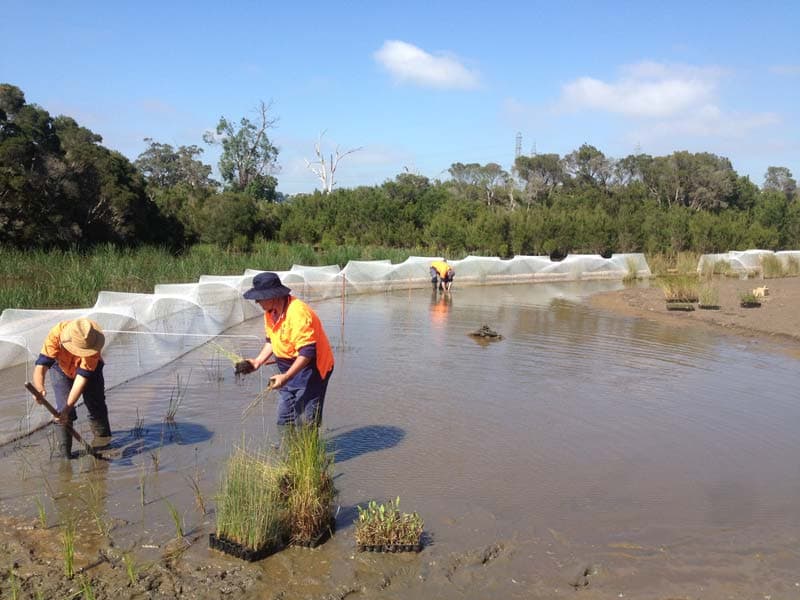
At Grasmere Creek, Woods Enviro's work included improving instream and riparian vegetation. The planting shown above illustrates why the intended habitat matters when choosing a revegetation approach. It shows wetland planting, rather than a hydroseeding application.
What to include in your enquiry
| Site information | What it helps establish |
|---|---|
| Location, plans and approximate area | The extent of the work and how it fits the wider project. |
| Photos of the ground, slopes and drainage | The conditions to discuss before deciding on treatment and preparation. |
| Access and construction programme | When work can take place and whether machinery or other trades will cross the area afterwards. |
| Vegetation requirements and project specification | The intended outcome and who will confirm the seed and treatment requirements. |
| Establishment and maintenance responsibilities | Who will inspect the area, arrange watering where needed and address areas requiring attention. |
Agree on preparation and handover
Before work starts, clarify which ground preparation tasks are included and who will complete them. Check the sequence against the remaining earthworks so a newly treated area is not immediately disturbed by the next stage of construction.
Then agree on the handover: what is included after application, who will monitor establishment and how follow-up work will be raised. Putting those responsibilities in the scope makes quotes easier to compare and leaves fewer decisions unresolved on site.
Talk through your revegetation project
Send your site location, plans, photographs and preferred programme to Woods Enviro. Include known access constraints and any required vegetation specification. The team can discuss how revegetation fits with the project's broader environmental works and erosion controls.
Seed selection, application requirements and any permit conditions need a project-specific answer. For background on the methods, see Transport for NSW's Biodiversity Management Guideline, which distinguishes hydroseeding, hydromulching and other establishment techniques.
Share: